

Remember ninth-grade English? The teacher made you read a book, then asked what it was about. You described what happened. She wanted to know what it meant. Apparently, those were two different questions, and only one of you had understood the assignment.
If you tell me Bougie Apocalypse is about people surviving a zombie apocalypse, you’re not wrong. There are zombies. People shoot them. Sometimes dinner gets interrupted. That answer gets you partial credit.
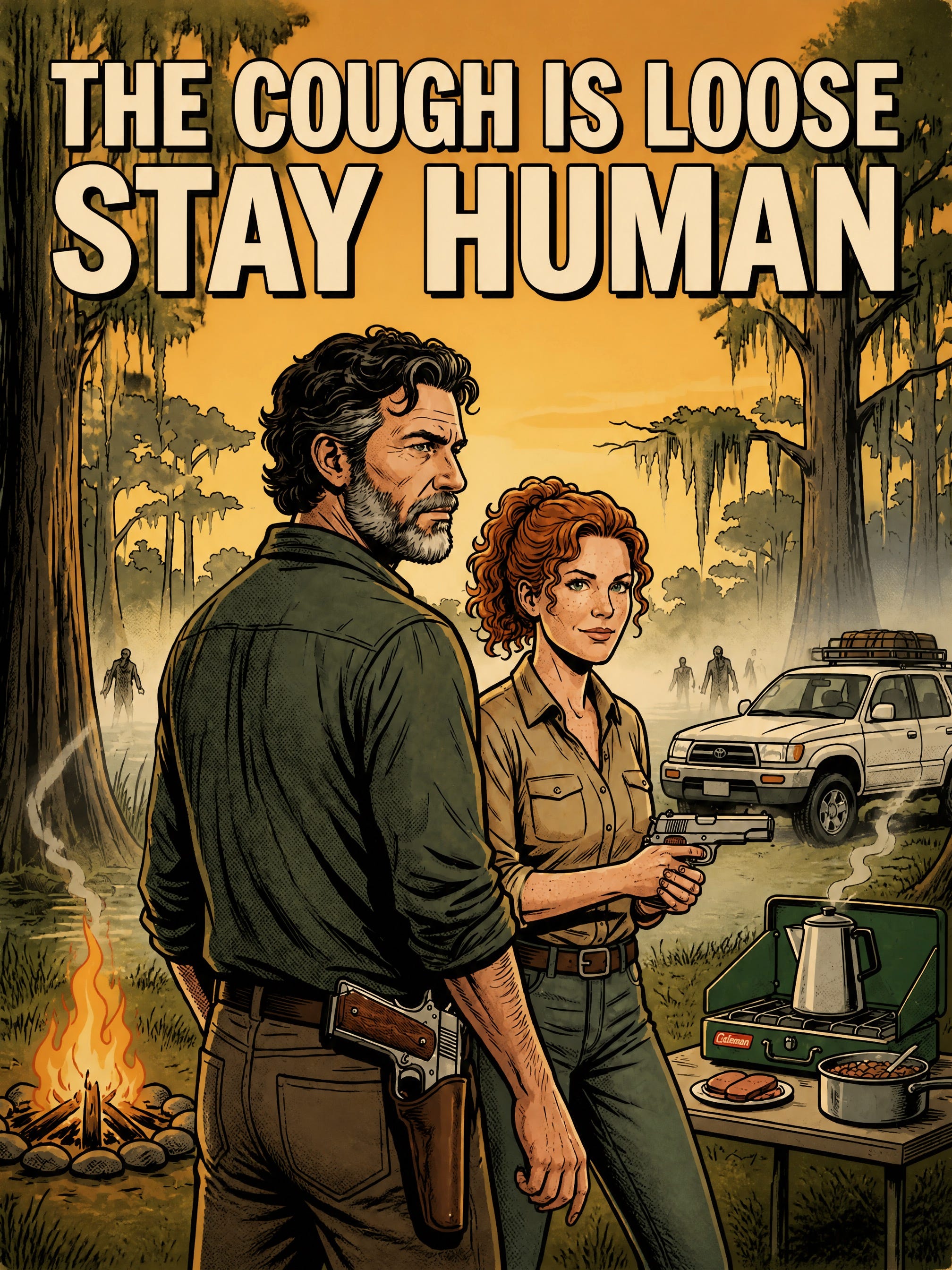
But why does Jack bother cooking heirloom beans when he could open an MRE? Why pour the rye into a proper glass? Why does an artificial intelligence spend so much time trying to understand people who insist on doing things the hard way?
Those are the essay questions. The zombies make staying alive difficult. The people have to decide what staying alive is for.
So, in a departure from standard ninth-grade procedure, the author is handing out the answer key. No test on Friday. Here’s what I’m getting at when I say Stay Human.
Survival is the beginning, not the purpose. Staying alive matters, but so does having a life worth living. Food, humor, beauty, affection, and small rituals preserve more than comfort. They preserve civilization.
People are not expendable variables. Love, friendship, and loyalty make survival more than a numbers problem. A community is made of particular people who matter, not interchangeable bodies or resources.
Competence is a responsibility to others. Cooking, healing, building, teaching, and defending are ways of caring for people. Civilization survives when people do useful things well and pass that knowledge forward.
Violence is human, but it must serve human preservation. Staying human does not mean refusing to fight. It means using force to protect people and their future, with restraint and accountability, rather than making cruelty, domination, or winning an end in itself.
Humanity requires judgment, creativity, and choice. Instinct, orders, and efficiency cannot settle every question of what is right or worth saving. Our characters questions let us examine those choices, often through something as ordinary as why anyone would cook beans instead of opening an MRE.
Welcome to the end of the world where civilization matters as much as just surviving.
Eric, You and ALL who served have my deepest respect, admiration, and gratitude. My grandfather served during WWI, my father during Korea, and while I have worked in law enforcement for over 13 years, it is among my greatest regrets that I never became a Marine and served this country as I had originally planned to do after college. May God bless and protect you and every veteran and your families, today and ALWAYS! Brian