

June 6, 1944
The English Channel tried to kill us before the Germans even got a chance.
I was nineteen, a private in the 4th Infantry Division. I had been seasick for every miserable hour of the crossing. Our LCI was packed with over two hundred soldiers crammed shoulder to shoulder. The air was thick with diesel fumes, the sour stench of vomit, and the metallic tang of fear-sweat. The Channel was choppy as hell. Waves slammed the hull and sent the boat rolling so badly that half the men were retching into their helmets or over the side. I had not kept anything down in what felt like days. My stomach was raw. My legs were weak. By the time the ramp dropped on the morning of June 6, 1944, I was already half-dead.
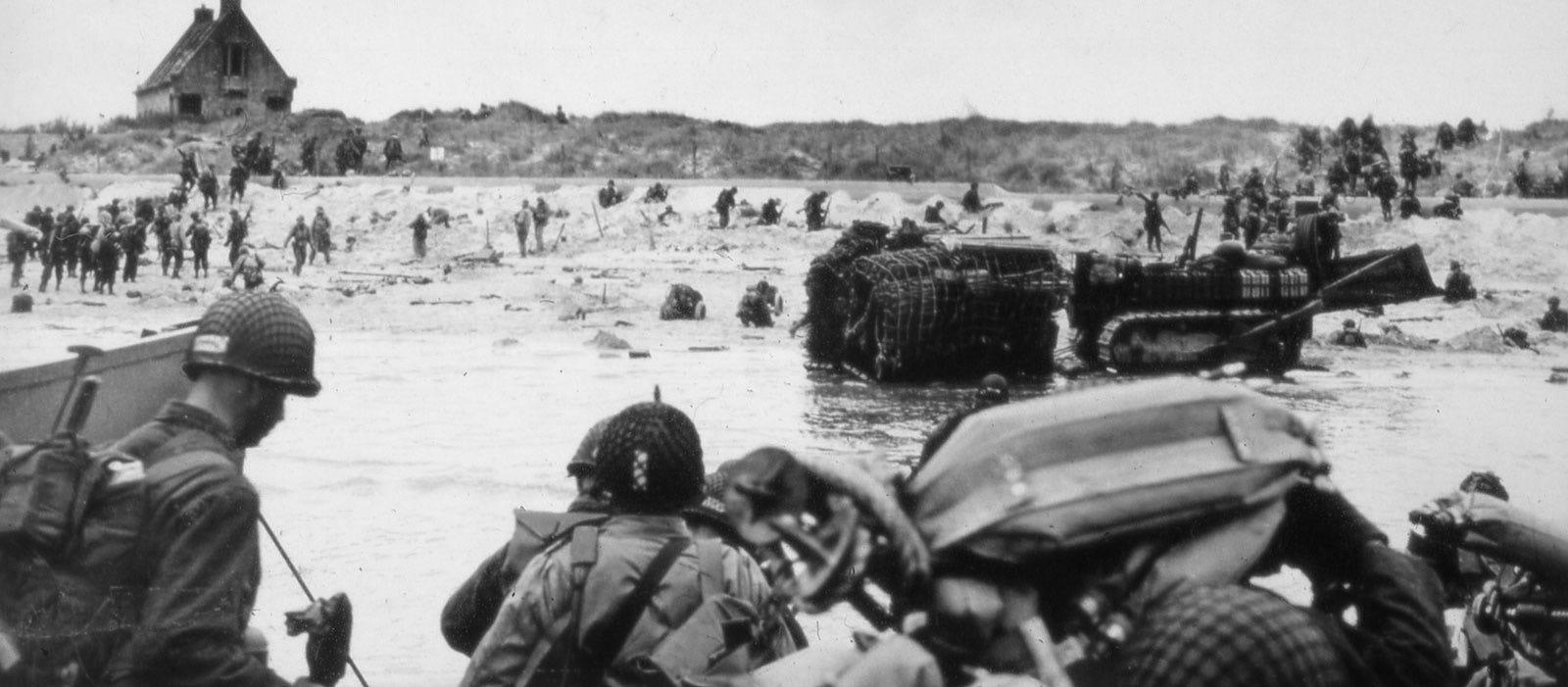
Then came the real hell.
Machine-gun bullets ripped through the air like angry hornets. Mortar shells shook the beach and sent black fountains of sand and water exploding around us. I stumbled through the surf with my rifle clutched in numb hands. I slammed face-first into the cold, wet sand of Utah Beach. I prayed the next explosion would not be the end of me.
My heart hammered. I pressed my cheek into the grit and tasted salt, sand, and bile. I thought I cannot do this. I am going to die right here without firing a shot.
Then a voice cut through the roar. It was calm and almost cheerful.
“We’ll start the war from right here!”
I lifted my head just enough to see him. An older man in a general’s stars limped across the open beach. He carried only a wooden cane in one hand and a pistol in the other. He wore no helmet. He never took cover with the rest of us. He had a grin on his face and that cane tapped the sand like he was on a Sunday walk back home. He had to be the oldest man on the whole damn beach. Bullets kicked up sand at his feet, but he did not flinch.
I recognized him. He was Brigadier General Theodore Roosevelt Jr., our assistant division commander. I’d heard about him. The man who did not have to be here at all. He was the son of a president. He had been wounded and gassed in the last war. He was rich and famous, yet he was still here. With us.
He spotted our pinned-down group and waved that cane like a baton. “Come on, boys! You’re not gonna let a few Germans ruin your day, are ya?” He laughed. It was a real, booming laugh. He started directing men off the beach. He pointed out paths through the obstacles and rallied soldiers half his age.
I watched him walk up and down that fire-swept sand all day. He never took cover. He cracked jokes between shell bursts. He personally led assaults on German strongpoints. The man had arthritis so bad he needed the cane. Yet he moved like the beach belonged to him.
Something inside me snapped. The seasickness, the fear, and the shame of lying there in the dirt all burned away. If that broken old general could walk through hell with nothing but a cane and pure guts, then I had no excuse to stay down.
I grabbed my rifle. I pushed myself up on shaky legs and ran to join him.
“Atta boy!” he shouted. He clapped me on the shoulder. “Let’s go clear that pillbox!”
I followed General Roosevelt that day. We all did. Because of men like him, Utah Beach became the success story of D-Day.
Thirty-six days later, I heard he died of a heart attack while still leading troops. They buried him at the Normandy American Cemetery in Colleville-sur-Mer. He rests in the section with the 4th Infantry Division boys, alongside the soldiers he led.
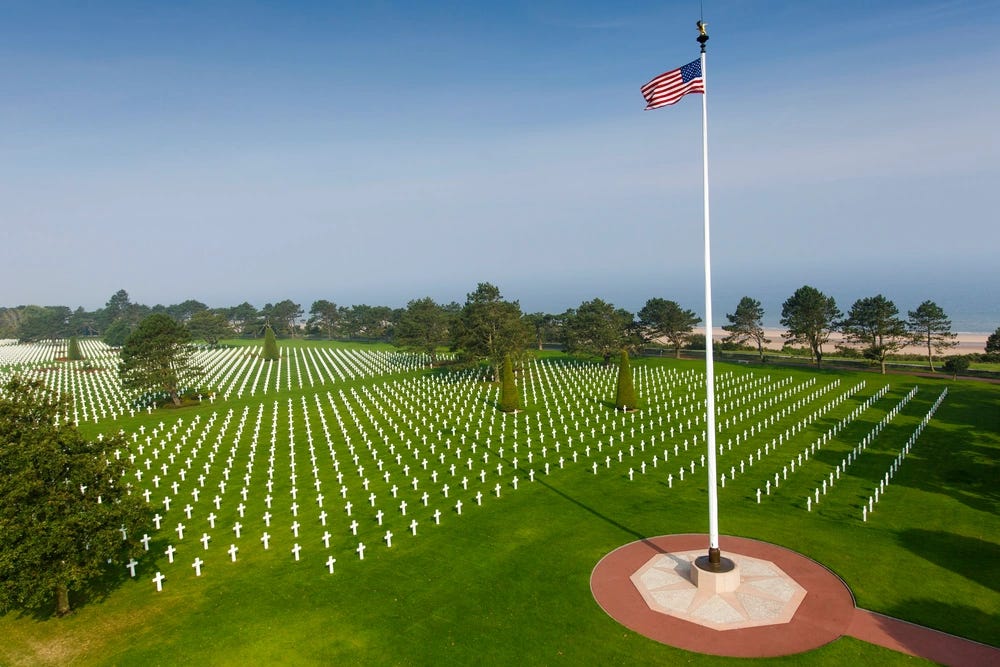
Forty years later, I was one of the guys who got to be at Normandy. I heard the President talk about that day. Later I slipped away from my tour group and found the General. I spent some time there at his grave saying thank you.
Author’s note: the story of Brigadier General Theodore Roosevelt Jr. is real. He was 56, had arthritis and a heart condition he hid from the Army doctors. He insisted on going ashore with the first wave. He was awarded the Medal of Honor for his actions that day. The soldier is fictional, an amalgamation of the stories of several soldiers on Utah Beach that morning. Most of them had never been in combat until that morning. Remember them.
I'll remember them always. My grandparents are buried at Ft. Indiantown Gap Cemetery. I had no idea my grandfather had served during WWII until after he passed while I was in basic. Nobody was allowed to talk about it around him, so my dad never told me before that.