

The holiday season is upon us, even in the Apocalypse. And Jack and The Family have an immense amount to be thankful for, starting with being alive and not zombies. They are going to spend the next week scavenging, hunting, and preparing for Thanksgiving. If you’d like to join in, here’s the menu and guides on how to cook everything. Don’t worry, you can probably do all this without having to shoot a turkey.
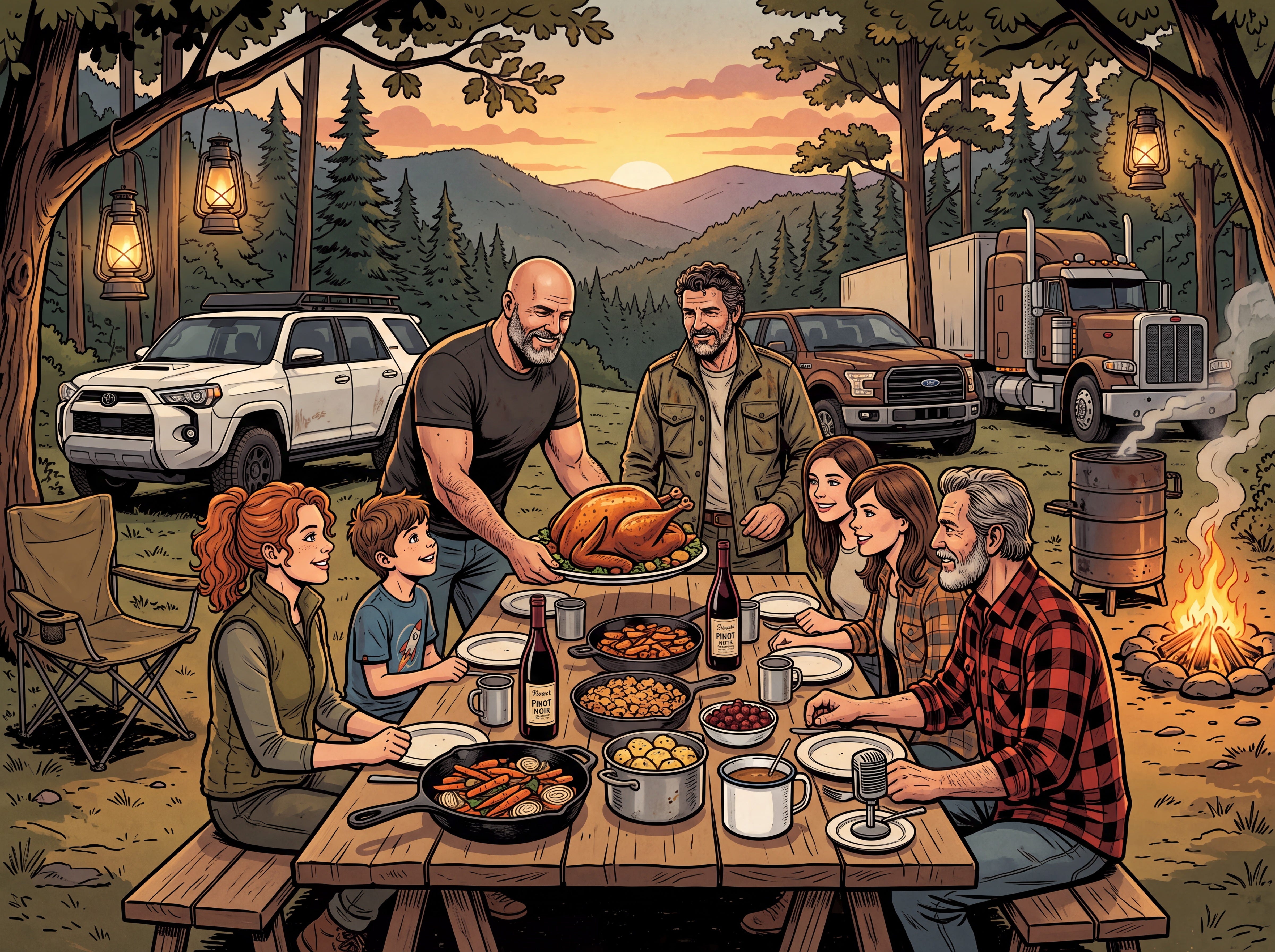
No boxes. No cans of gray cream-of-something soup. A spatchcocked bird, tallow, root cellar staples, Pinot Noir, and the refusal to eat like a refugee on a holiday.
Thanksgiving in Jack’s house is not a catering event. It is not a competition to see who can fit the most marshmallows onto a sweet potato or who can spend a small fortune at a specialty market to impress people they don’t even like.
When the grid is up, you buy the ingredients at the store and cook on the range. When the grid is down, you hunt, pull from the root cellar and dry stores, scavenge what is worth carrying, and cook over live fire. Either way, the rule stays the same: you mark the calendar, you gather your people, and you put real food on the table. When things go sideways, standards are the first thing most people drop. Jack doesn’t drop his. He just scales the logistics to fit the terrain.
Every item on this table is inexpensive, simple to execute on a standard home kitchen range (and just as easy over a campfire or camp stove), and built entirely from basic ingredients you can actually store and find when the trucks stop running.
Things to Scavenge For
Dinner: Pinot Noir
Liquor stores get picked clean of cheap whiskey and vodka in the first forty-eight hours. The wine racks, especially anything that doesn’t have a screw cap, usually sit untouched until someone with sense comes along. If you are clearing a supply run before the holidays, grab Pinot Noir.
It has enough acidity to cut through the tallow and smoked meat without overpowering the bird. Plan on one bottle per four adult guests. That’s enough for a proper toast and a glass with dinner without anyone getting sloppy on perimeter watch. Pour one ounce for the kids in a real glass. A single ounce at Thanksgiving dinner won’t turn them into alcoholics. Let the kids celebrate with you. And it teaches them how to sit at the table and be part of the feast. That is Jack’s recommendation. Readers may run their own house as they please.
After Dinner: Spirits, Coffee, and Cigars
Once the plates are cleared and the apple crisp is gone, you don’t turn on a television. You sit around the table or the fire and finish the evening properly.
The Pour: Cognac or single malt whiskey. You don’t need much, just enough to warm the glass while the fire dies down.
The Coffee: A dark roast, made strong. Skip the weak diner sludge. Jack recommends Stocking Mill Midnight Run or Fire Dept Coffee Skull Crusher, brewed heavy in a percolator or French press so it stands up to the dessert and the cold air.
The Smoke: Cigars for the adults. Leave the heavy, pepper-bomb maduros in the humidor unless you know your crowd. Jack recommends Montecristo White Label: smooth, creamy, and mild enough that it won’t overwhelm guests who don’t smoke regularly. If you can find them, grab a box of chocolate cigars for the kids so they get to unwrap theirs and join in with the adults.
(Full disclosure: Jack does not get paid by any of the brands recommended here. Boy, wouldn’t that be nice?)
The Bird: Spatchcocked Turkey (Smoked or Oven-Roasted)
Whether you harvested a wild tom or bought the cheapest whole bird in the grocery store freezer case, spatchcock it. Do not skip this step. Take a pair of heavy kitchen shears or a sharp knife, cut down both sides of the backbone to remove it, flip the bird over, and press down hard on the breastbone until it cracks and lies completely flat.
Leaving a turkey whole is how you end up with dry, chalky breast meat while waiting three hours for the thighs to finish. Spatchcocking exposes the entire bird to even heat, cuts the cooking time nearly in half, and lets the skin render and crisp properly. You end up with moist white meat and perfectly cooked dark meat every single time.
The Ingredients: One whole turkey (backbone and neck saved), kosher salt, 4 tablespoons rendered beef tallow or melted butter, dried sage, dried thyme, garlic powder, and black pepper.
The Prep: Salt the spatchcocked bird generously all over the day before and leave it uncovered on a rack in the fridge or a cold box overnight so the skin dries out. Before cooking, rub it down with melted tallow, dried herbs, garlic powder, and black pepper.
The Cook (Smoker): Jack normally smokes his bird. Run your smoker hot and dry at 325°F with fruitwood like apple or cherry, and leave the water pan empty (set a foil pan underneath if you want to catch the drippings). Pull it when a digital thermometer in the deepest part of the breast hits 155°F–160°F (and the thighs hit 175°F+). Carryover heat will coast the breast to a safe 165°F while it rests.
The Cook (Oven): If you don’t have a smoker, set the spatchcocked bird on a wire rack over a rimmed sheet pan and roast it in a 425°F oven. On a standard 12-to-14-pound bird, it will hit 155°F–160°F in the breast in about 75 to 90 minutes. Rest it for at least 20 minutes before slicing; the breast will climb to 165°F while it rests. (Live-fire note: If the power is out and you don’t have a smoker, run it over indirect coals in a covered kettle grill or a large Dutch oven.)
The Gravy: Pan-Dripping & Cider Vinegar Gravy
If you buy gravy in a jar or a foil packet, you are paying for modified corn starch and brown food coloring. You already have the backbone, the neck, and the drippings. Use them.
The Ingredients: Turkey neck and backbone, pan drippings, 3 tablespoons skimmed turkey fat or tallow, 3 tablespoons all-purpose flour, 1 tablespoon apple cider vinegar, salt, and black pepper.
The Method: While the bird cooks, simmer the neck, backbone, and a pinch of dried herbs in a quart of water on the stove for an hour. Strain it. Put three tablespoons of skimmed fat or tallow in a skillet over medium heat, whisk in the flour until it smells nutty, and slowly whisk in your hot broth until it thickens. Hit it with the apple cider vinegar at the end to cut the richness, then season with salt and pepper. (Live-fire note: Simmer the stock in a pot on the edge of the coals and finish the gravy in a cast-iron skillet over medium heat.)
The Starch: Garlic & Tallow Smashed Cellar Potatoes
Potatoes keep for months in a cool, dark basement or root cellar. Peeling five pounds of them is busywork, and dumping heavy cream into them just puts everyone into a coma before the perimeter watch changes. Leave the skins on.
The Ingredients: 3 lbs potatoes (red, yellow, or russet), 6 cloves garlic (peeled), 1/3 cup melted tallow or olive oil, kosher salt, and black pepper.
The Method: Put the whole potatoes and garlic cloves in a pot of cold, heavily salted water on the stove. Bring to a boil and cook until a knife slides in with zero resistance. Drain them well, dump them back into the warm pot, and smash them roughly with a fork or masher. Fold in the tallow and black pepper. (Live-fire note: Boil in a covered pot over a camp burner or open flame, or wrap whole potatoes in foil and roast them directly in the ash bed.)
The Vegetable: Skillet-Charred Carrots & Onions
Fresh green beans vanish three days after the supply chain breaks. Carrots and yellow onions sit in a root cellar all winter and cost pennies when the stores are open. High heat turns them sweet and smoky without adding a gram of sugar.
The Ingredients: 2 lbs carrots (scrubbed and sliced on a bias), 1 large yellow onion (sliced thick), 2 tablespoons tallow or bacon grease, salt, and black pepper.
The Method: Get a heavy carbon steel or cast-iron skillet smoking hot over a high burner. Add the tallow, then drop in the carrots and onions in a single layer. Leave them alone for three minutes so they blister and char on the bottom, then toss. Cook until tender with blackened edges, then hit them with salt and pepper. (Live-fire note: Set that same cast-iron skillet straight over hot coals. It actually works better over real fire than on a glass cooktop.)
The Acid: Spiced Dried-Fruit & Cider Compote
Fresh cranberries are seasonal luxury items. Dried cranberries, raisins, or dried apples sit in airtight jars for years, and apple cider vinegar never goes bad. Simmering them together gives you the exact sweet-tart punch a heavy holiday plate needs.
The Ingredients: 2 cups dried cranberries or raisins (or chopped dried apples), 1.5 cups water, 2 tablespoons apple cider vinegar, 2 tablespoons honey or maple syrup, a pinch of cinnamon, and a pinch of salt.
The Method: Dump everything into a small saucepan on the stove and simmer over low heat for 10 to 12 minutes until the fruit plumps up and the liquid reduces to a thick glaze. Make it the day before and serve it at room temperature. (Live-fire note: Ten minutes over a single camp stove burner or the cool side of a fire grate is all it takes.)
The Dessert: Skillet Apple & Oat Crisp
Pie crust requires cold lard, pastry cutters, rolling pins, and patience. Storage apples from the cellar, rolled oats from a five-gallon bucket, and a touch of honey go straight into the same skillet you sear steaks in.
The Ingredients: 6 firm storage apples (cored and sliced, skins on), 1 teaspoon cinnamon, 2 tablespoons honey or maple syrup, 1 cup rolled oats, 1/2 cup all-purpose flour, 4 tablespoons melted tallow or coconut oil, and a pinch of salt.
The Method: Toss the sliced apples with cinnamon and honey right in a 10-inch cast-iron skillet. Mix the oats, flour, salt, and melted tallow in a bowl until clumpy, then scatter it over the apples. Bake in the oven at 375°F for 35 minutes until the apples are soft and the oats are toasted. (Live-fire note: Cover the skillet with a tight lid or heavy foil and set it over low coals with a few coals on top of the lid for 30 to 35 minutes.)
Jack’s Scavenging List
Meat & Fats
1 whole turkey (12–14 lbs, neck and giblets included)
Rendered beef tallow (at least 1 cup total—or substitute unsalted butter, bacon grease, or olive oil)
Produce & Root Cellar
3 lbs potatoes (red, yellow, or russet)
2 lbs carrots1 large yellow onion
6 firm storage apples (Granny Smith, Honeycrisp, or whatever kept in the cellar)
1 bulb garlic (you need 6 cloves)
Dry Stores & Pantry
1 cup rolled oats
3/4 cup all-purpose flour (split between the gravy and the crisp)
2 cups dried cranberries, raisins, or chopped dried apples
Honey or pure maple syrup (at least 4 tablespoons)
Apple cider vinegar (at least 3 tablespoons)
Kosher salt
Whole black peppercorns (or ground black pepper)
Dried sage
Dried thyme
Garlic powder
Ground cinnamon
The Bar, Coffee & Humidor
Pinot Noir (1 bottle per 4 adult guests, plus a splash for the kids)
Cognac or single malt whiskey
Dark roast coffee (Stocking Mill Midnight Run or Fire Dept Coffee Skull Crusher)
Montecristo White Label cigars (1 per adult smoker)
Chocolate cigars (for the kids)
The Rule
A holiday meal doesn’t need to be complicated to be worthy of the people sitting around your table. Store real staples. Scavenge what matters. Cook it properly, pour the Pinot, light a decent cigar, and save the smoked carcass for Friday’s soup pot.
Stay human.