

The modern world ended in a flash of ionized air and the heavy ozone smell of a temporal displacement engine, leaving fifty men stranded in a city that smelled of woodsmoke, wet wool, and ancient dust.
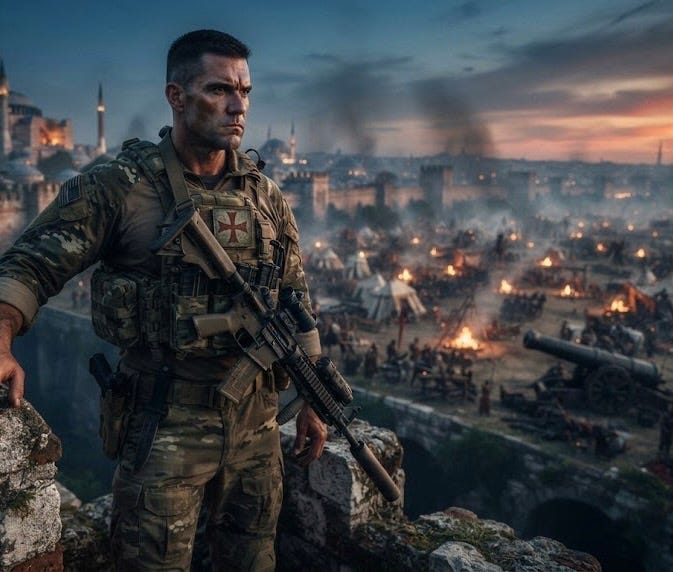
Marcus stood alone on the stone walkway of the Theodosian Walls, the chill wind cutting through his multicam blouse. Below him, the double line of fortifications dropped away into the dark, stretching like the spine of a sleeping titan between the Sea of Marmara and the Golden Horn. In the distance, spread across the Thracian plain like an enormous, glittering carpet of malice, burned the campfires of Sultan Mehmed's host. A hundred thousand men, bloodied but not broken, waiting for dawn.
Back home, they'd called it an anomaly. A classified physics anomaly with a zero-percent recovery rate. The military planners in Virginia had looked at the computer models, crunched the logistics for the final defense of the Byzantine capital, and checked a box. They needed a scalpel that wouldn't bounce back. They needed men who wouldn't try to find a way home, because the door was welded shut behind them.
They chose him because of his rank, yes. They chose him because he could run a hundred-man element through a complex urban grid blindfolded and take down an objective with cold, methodical precision. But that wasn't why The Hinge picked Marcus to hold the pen when history was rewritten.
It picked him because he believed.
While the rest of the boys traded dark jokes about internet memes and dropping an ODA into the fifteenth century like an unhinged Reddit thread come to life, Marcus felt a crushing, holy gravity settle into his bones. To Cooper, it was a tactical deployment gone sideways. To Lucius and Kovac, it was an engineering puzzle of black powder and forged steel. To Marcus, it was a debt. A centuries-old ledger entry the modern West had long since forgotten, and he'd been handed the keys to settle it.
He rested his calloused hand against the cold, hand-cut limestone of the rampart and felt the vibration of a city holding its collective, terrified breath.
If you're going to die five hundred years before you were born, he thought, watching a distant Ottoman torch flicker across the dark plain, you'd better believe in what you're dying for.
The modern era was a ghost story now. The rifles would eventually run dry of brass and propellant. The NVGs would lose their charge. The high-tech gear would turn to museum dust. When that day came, what remained wouldn't be the U.S. Army. It would be iron, pikes, sulfur, and the unyielding will of men who refused to let the light go out.
Marcus closed his eyes against the wind, breathed in the smoke of the dying empire, and turned back toward the stairs.
It was time to build the wall.
Author's Note
The Last Romans explores a simple, high-stakes question: what happens when modern American special operations meet the dying days of the Byzantine Empire in 1453? What if the meme came to life?
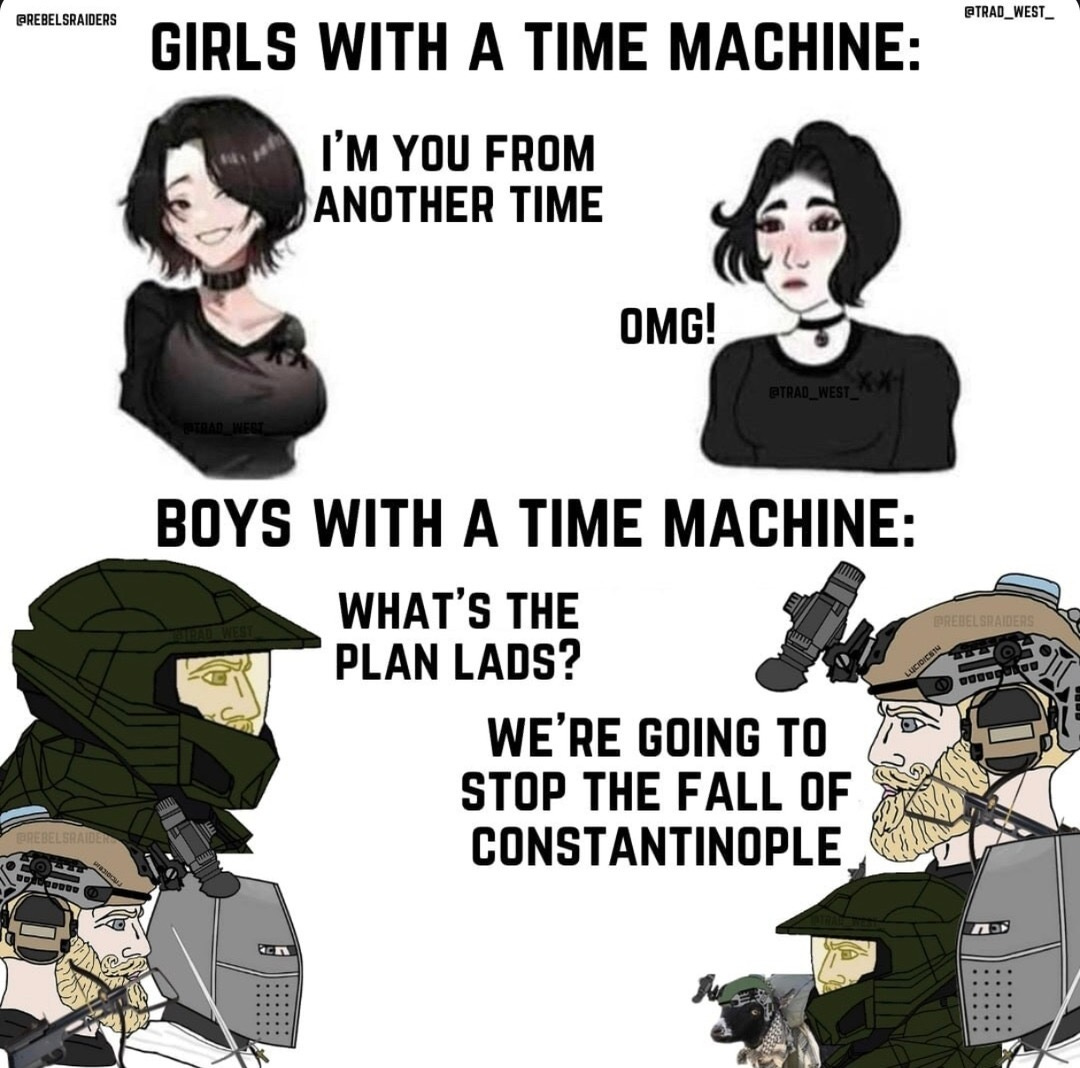
For Marcus Valerius, a team leader who left his secular life behind to take up a mantle of divine destiny, the defense of the Theodosian Walls isn't just a tactical deployment. It's a sacred crusade. This interregnum marks the pivot point where the shock of arrival gives way to the industrial and spiritual work of rewriting history.