

You want to write a book. You don’t know where to start. Here’s my tale from start to finish.
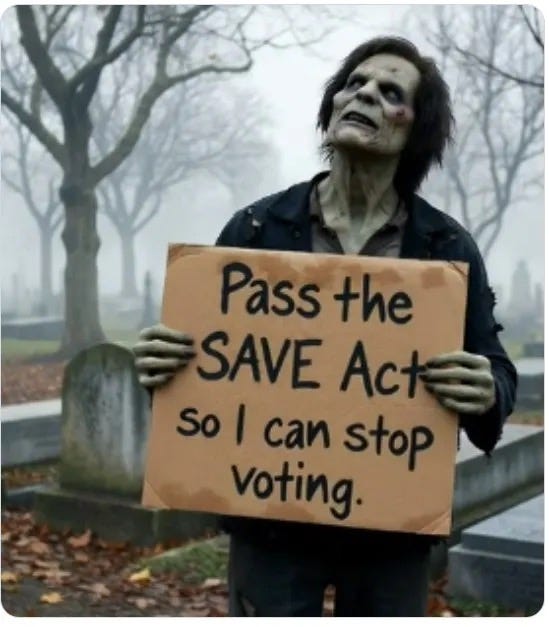
It all started on April 14, 2026. There I was, surfing the internet, when I ran into a meme showing a zombie telling people to pass the SAVE Act so he didn’t have to vote anymore. (Don’t worry, this isn’t a political post—it’s just to show that inspiration can come from anywhere.) I laughed at the meme. And then I got a weird idea: I could write a zombie story.
And not just any zombie story, but one that combines my love of Steve Sando’s heirloom beans, post-apocalypse survival, and zombies. I knocked out 600 words in about 15 minutes flat, looked at what I’d written, and started laughing. Because I knew the perfect title for my zombie world: The Bougie Apocalypse.
The absurdity was fantastic. My character was a retired Sergeant Major, but here he was insisting on taking $200 carbon-steel pans and $6/lb heirloom beans with him as he escaped the apocalypse.
I edited to fix the typos, grammar, and missing words, then stuck it on my Substack (the one about Rome, the American experiment, cigars, and BBQ). I thought no more of it. Until the next morning, when I woke up to hundreds of people reading it, liking it, and commenting on Bougie Apocalypse.
Idea
And now I had an idea. I like pulp fiction. I like serial stories. I like zombies. And I like military and post-apocalypse fiction. What if I wrote a serial pulp fiction story and published it on Substack? Every chapter would be self-contained, but what came before would matter. Every chapter would have a fun pulp-magazine-style image. There would be world-building to explain the characters and the world they exist in.
That same day, I created Jack and Raych Harlan as fully fleshed-out characters surviving in a world turned mad by The Cough.
A Chapter
I wrote another chapter. My poor, benighted protagonist and his anchor didn’t get to have any beans yet, but they did kill some zombies and enjoy some good coffee. Well, that’s a kinda bougie start, but dang, he’s gonna have to make some beans. By now I’d come up with some taglines for Jack and Raych:
Stay Human
First we shoot the Walkers… then we eat the beans
Jesus, you killed a zombie with a frying pan
Before I knew it, I had a story outline and a plan. It was obvious this thing had to move off that other Substack. The clash between fiction writing, 2-3 zombie chapters every week, and a pretty buttoned-up blog about Rome and the American Republic was too harsh in the daylight. Which is how this Substack was born. Lucky you, dear readers.
Six Weeks
Over about six weeks, every night I knocked out a draft chapter, edited it for serial publishing, or created a fun pulp image. My clear mission: this story would be bougie and fun, not grimdark horror.
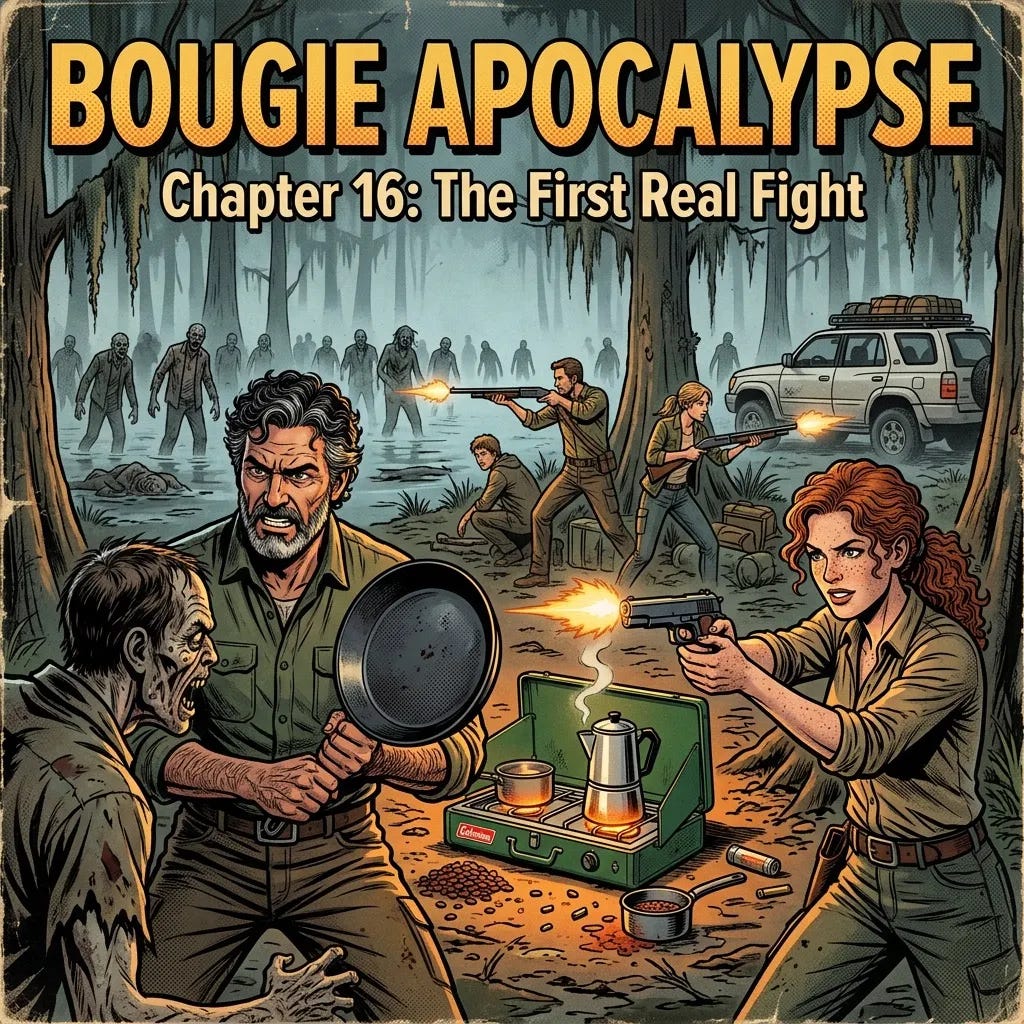
Before I knew it, I had 26 chapters written, art built, everything edited, expanded, and coherent. Holy crap.
A Series
That’s when I got the bigger idea. This could be a series. The first serialized book would end up about 18,500 words. A novella. But there were a lot more words in me about Jack and Raych and their crew.
I laid out a series outline with major acts for each book and a prequel to give us the origin story of Jack and Raych:
Prequel – Sergeant’s Ledger
Book 1 – The Cough Is Loose
Book 2 – Staying Human
Book 3 – The Zombie War
I looked at it and said, “Okay, let’s write a prequel chapter and a Book 2 chapter and make sure the words still come.” Sure enough, they did. Jack, it turns out, is a genuine badass, and so is Raych. Tom is an old Marine, Sarah is resilient and can shoot, and Mikey is a gamer kid. It’s all going to matter.
I discovered through experimentation that AI could be helpful, but should never write the outline, beats, or the prose. Proofread? Yes. Find typos? Yes. Highlight stupid repetition? Yes. Evaluate ideas and give good plans? Absolutely. The mechanics of the various tools? Grok handled that decently and much faster than I could.
When I had Grok write a whole chapter, I ended up rewriting a lot of it. However, there was actually a good base to work from. Up to you. Trade-offs.
A Manuscript
And then I had an idea. A wonderful, awful idea. I could publish this. My wife pointed out that Amazon Kindle Direct Publishing would let me create the book and release it digitally and in paperback. YES! Let’s do it!
First, I had to gather all those chapters from Substack into a document I could edit, review, tighten, expand, and do all the other things authors do to create a book. That was a royal pain, but I got it done.
Reading what I had put together, it was clear: it needed expanding. At that point it was a bunch of loosely connected chapters totaling just under 14,000 words—a novelette. Okay. Dive in, Eric. Add more description of the people, the swamp, the zombies. Make the fights better. Fewer chapters, with more story in each.
So I did… and I had a genuine manuscript with 3 Acts, 17 chapters, a cliffhanger, and cover art. Wow.
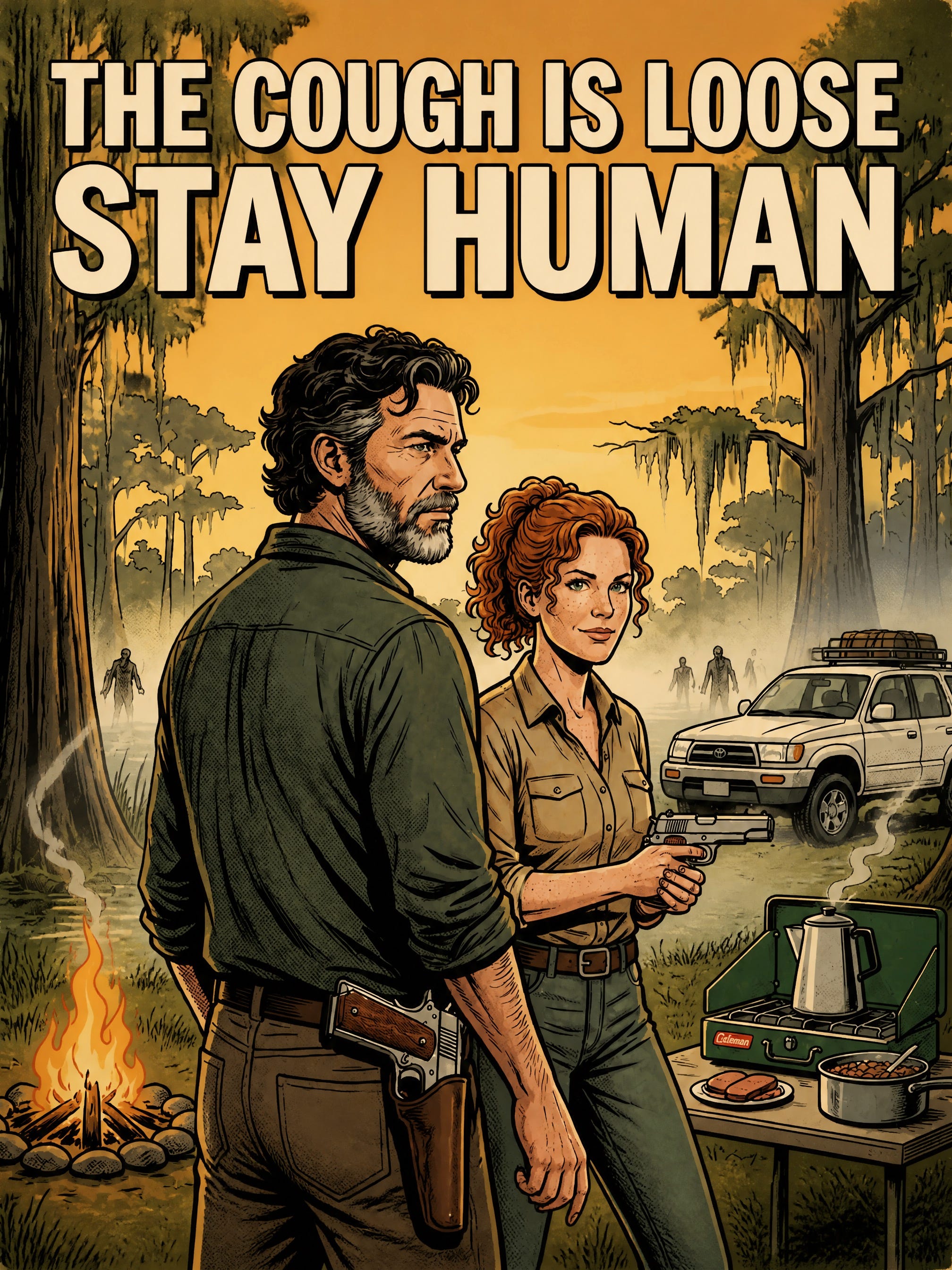
(If you’re curious, the Nano Banana 2 AI model is good for golden-age pulp fiction art. Someday I’ll hire a human artist, but for now AI is it.)
A Book
But how do you create an actual book? Let me tell you, it’s an adventure.
There are decisions to be made. What platform? (I chose Amazon.) What about an ISBN? Amazon will give you one, but it can only be used on Amazon. Or you can get a universal ISBN from Bowker. Yep. That’s what I wanted.
What about style and format? This is pulp fiction, so I needed pulp energy. Black and white, no color. Just a few images. No fancy headers, no table of contents. The old pulp guys kept costs as low as possible, and so would I. I wanted this book to feel like those classic 100-page pulp novellas.
Okay, key decisions made. I created the Amazon KDP project. In that process I learned all about building a cover wrap: front art, title, author, publisher, spine, back cover blurb, author blurb. Whoa. Deep breath.
And now to the interior. You have to create front and back matter. There’s a title page, copyright page, dedication (my wife, of course), full author bio, “coming soon,” etc. Then bring every chapter into the KDP template, set the font type and size right, make sure you paginate properly (every chapter starts on a right-hand, odd-numbered page, for example).
I did that whole thing in one glorious 3-day burst of crazy editing, manuscript building, proofreading, printing it like 8 times, and fixing problems each time.
And here we are. I uploaded the whole thing, did all the Amazon KDP reviews, set a price, and created both the digital and paperback versions.
Holy crap. Seven weeks. Anywhere from one to eight hours every single day. No breaks on Sunday. Or my birthday, which came in the middle of it all. Go to dinner on Friday night with my wife, come home and work on the book. Work during the day (I’m a security guy with real clients who expect me to show up) and then tackle the book at night.
And now the proof copy of The Cough Is Loose is being printed and shipped. It gets here on Thursday, June 4th.
I have enough chapters of Book 2 written (plus the final chapters of Book 1) queued for the Substack that maybe I can take a day off. Maybe.
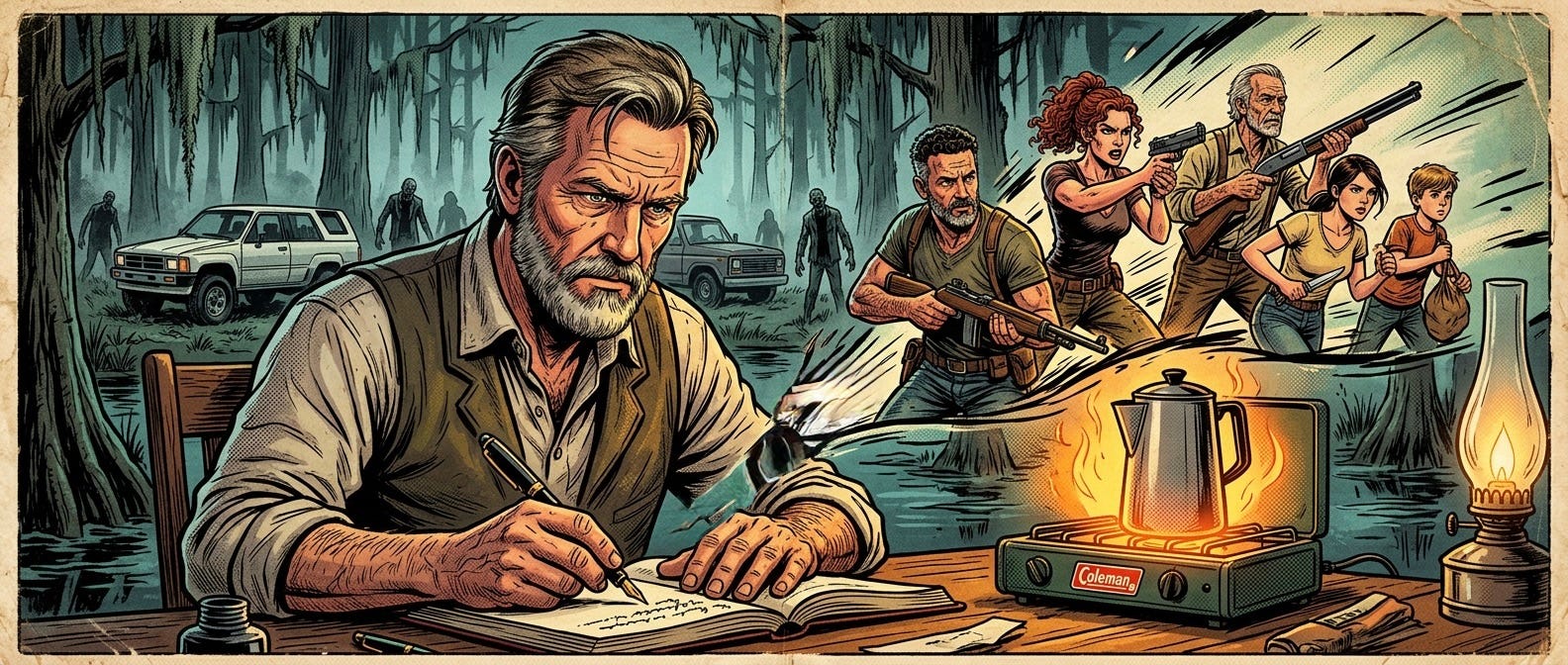
The release date is July 1, 2026. The Kindle version will be released this week.
Facts and Figures:
49 days, about 120 hours, some nights with no sleep at all
100 pages, 3 Acts, 17 chapters, 18,300 words
One Amazon KDP account, one Bowker account, one new substack, 950 newsletter subscribers
2 bottles of rye whiskey, not sure how much wine, at least 5 cups of good coffee a day, and 20 or so cigars
Bougie Apocalypse
A serialized military-flavored post-apocalyptic pulp story about heirloom beans, De Buyer carbon steel skull-crackers, good coffee, and refusing to let the apocalypse win.
Next chapter drops soon → Start Here & Full Reading Order
And soon to be a book!
#BougieApocalypse #TheCough #StayHuman